
Map
An ever-growing map of your story

Recent Insights
“Four days took eleven unprepared seconds. The thing for Danny I have drafted, redrafted and written plainly on purpose, and still not shown him. I should probably take the hint.”
“Saying no to Dale was easier the second time. It is apparently a muscle, and the corridor sentence about four days came out of the same arm.”
“I cried after I hung up. Good crying, I think. It is getting harder to tell the difference lately, which I suspect is actually a reasonable sign.”
“That is true. It is also the kind of true I have been using all year.”
“It took four years, a client's sentence, a supervisor's word, a drawer and about fifteen thousand words in here to arrive at three lines. The elegant version goes in a drawer with the ninety-second version, so plain is the only form of it I can actually use.”
Open questions

Discernment or the same move in a better coat
You chose not to spend a good day on the entry, and you cannot currently tell whether that was genuine discernment or the most sophisticated version of the move you have been making all year.

Whether to tell Hannah about the appointment
You have told Danny and Tess and nobody else, and Hannah you might tell, which a month ago would not even have been a question.
Whether I would be told
Underneath the kids question and underneath the money, the thing you found after four minutes of not typing is whether you would find out, whether you would be told. Put in one sentence, it is whether you can plan a life with somebody whose bad news arrives late. Written plainly, it is that you will have a child, there will be a bad year, he will decide on his own how much of it you need to know, and you will find out from a letter.
The next sentence after it's fine
What you would actually say about Greg if you did not say it's fine, which you have had four years to work out and still do not have.

Saying the checking out loud in that room
Whether to say to a supervisor, in a professional setting, that you check your fiancé's bank statements, which would turn a private oddity into a thing about your relationship that somebody else knows.
Six hundred and ninety miles
Whether you can keep living thirteen hours away from your parents, which is fine for a holiday and not fine for a Tuesday when something happens.

What it would take for me to say yes
Danny asked, at the sink, what it would take for you to say yes to it, not soon, yes, and you did not have an answer ready. Two days of writing it down gave you one, and Tess asking the same question in a different mouth is where you said it out loud for the first time.

How long I am prepared to wait
The question underneath the sums, how long you are prepared to wait for somebody else to be ready, which is a boundary rather than a fact about biology.

Whether to reset the room between clients
Priyanka asked whether you ever reset the room between clients, and you said no, and her ninety degrees and back has been in your head at least monthly since.

Private practice, picked up and put back down
Whether to leave the practice and go out on your own, a question you have raised and set down so many times that putting it down has become the automatic half. You have now done the maths properly, and on paper it works with room to spare, which told you the number has never been the problem. What you would actually need is for one of the two incomes in the house to be boring, and yours already is.
Whether we are standing still
The sentence you did not say out loud, that watching Hannah with hers makes you feel like you and Danny are standing still, and arguing with it has not made it go anywhere.
Themes

The same four years
Writing down that you have not been in therapy for four years, you noticed for the first time that it is the same four years as everything else you are not doing.

The other side of the wall
You keep finding out that Danny was standing on the other side of a wall you thought you were leaning on alone, and you are starting to wonder how many more of these there are.
One thing with four faces
The move, the baby, the money and the Feldman year are not four decisions, they are one decision wearing a coat, and solving them in rotation is why each one keeps coming back looking solved.

Everybody does a version of management
Almost everyone close to you handles you in some way, Danny solves, your mother reassures, Priyanka has a professional frame, Hannah compares, and the one relationship that works is the one where the thing is just received and left on the table.

Vigilance rather than anxiety
The word Priyanka used about a client landed in your sternum, because anxiety is about what might happen and vigilance is about what already did, and you recognised which one is yours instantly.

The hours that do not show up on the books
The work you are counted for is the time in the room, and the real cost is everything that happens around it.
Patterns

The reason that is true and also does the job
You postpone on a reason that is genuinely true, and you have started noticing that true is the kind of cover you have been using all year.

Preparing to ask instead of asking
Past a certain point, preparing to ask is the thing you do instead of asking, and the more carefully something is prepared the more certain it is that it has been prepared for years.

The fluent ninety seconds
When the year with Greg comes up, a sanded ninety-second version arrives on its own, true in every detail, slightly funny in the middle, ending with these things happen.
Swapping the real sentence for a smaller one
You open your mouth with the real sentence loaded and swap it on the way through your teeth for a smaller one that will not require anything of either of you.

Refining a clean sentence until it says nothing
When you have a sentence that is true and short, you work on it until it is fair and balanced and acknowledges his side, and by the time you say it, it is four paragraphs long and says nothing.
Fine beside a problem, sideways facing each other
You and Danny are completely fine put next to a physical problem, and it is the conversations with no object in them where you go sideways.

Bottling it because he was too available
You get the opening sentence out, and when Danny puts things down and turns round and gives you his entire attention, the availability is more than you braced for and you postpone.

Mistaking the quiet for the result
You stopped discussing it and then took the silence as proof it was forgiven, which is a completely different operation and one you would spot in a client in a single session.

The small private audit
Four years on, you still go looking, reading dates and hunting for a number you do not recognise, and he does not know the checking is running.
Extremely well informed about the thing I am not doing
You give the short, warm, persuasive speech about why clinicians need their own work, and you have not been in therapy for four years.

Telling him once it is resolved
You tell Danny things once they are finished, so he hears them as news, and what that means is he finds out what has been hard only once it is over.

Never getting as far as booked
For five months you moved the appointment without ever cancelling it, because you never got as far as booking, and each reason you gave yourself lasted only as long as the next one took to arrive. On November 12th you booked it, and the four minute thing fit between a client cancelling and the next one arriving.
Through me rather than past me
Something comes across the room and goes through you rather than past you, and none of it shows until you are four streets away and have to pull over.
The radio stays off on the drive home
What used to be an occasional silent drive home has become a reliable indicator, to the point where you could tell the state of your week by counting them.

The three in the morning carousel
Awake at three, the same worries come round in the same order, and because each one is manageable alone and only the whole set ever shows up at that hour, none of it survives daylight and none of it gets dealt with.
Arguing his case for him, against myself
When something would cost Danny something, you build his objection for him and then lose to it, without ever having asked him what he thinks.

All of my actual living happens in a parked car
When something real is happening, you pull over into the one place in the day with no role attached to it, let it happen there, and then get out and resume.

Lying to Danny about nothing
When something small happens that you cannot explain to yourself, you hand Danny a tidier version of it, and you have now logged two of these in a month, both to him, both about nothing.

Waiting for the rest of the sentence
When good news arrives, you do not feel relief, you wait a couple of minutes for the bit where it turns out to be less than it looks, and what comes instead of gladness is bracing. You have now counted it four times since June, you have said it out loud for the first time, and Danny dated it without hesitating. Since the Feldman year.

Functioning as evidence I do not need anything
You have been treating the fact that you are functioning as evidence that you do not need anything, which is the exact thing you would ask a client to look at.

Arranged so nobody is positioned to notice
From the inside it does not look like a gap, it looks like coping, because you are not falling apart and nobody is placed close enough to see what it costs.

His room-giving read as the subject being closed
When Danny asks a real question and you say you do not know, he goes quiet to give you room to come back to it, and you read the quiet as the subject being closed.
Carrying a complaint rather than a request
You have been holding this for the better part of a year as a complaint, because a complaint is safe and never has to be refused, where a request would need an answer.
Hunting for the cause instead of letting it be
When something arrives with no trigger you can point at, you go looking for a reason, and you have seen that the looking is itself a way of not letting it simply be a Tuesday where you cried in a car park.

Acknowledging the question warmly and then moving
When a question gets too close, you meet it warmly and then steer onto something else, and the other person usually lets you.

Handling it privately so it does not become everybody's
The rule you grew up under was never stated and completely understood, that it is handled, that handling it is a private activity, and that saying it out loud would make it everybody's, and you have been running it yourself at eleven at night with a laptop.
Shoulders up at a number
When a big number lands, it goes into your body and stays there through the evening, even when the evidence says it will be found.

Needing permission for time that arrives free
When unexpected empty time lands and nobody has given you permission to use it, you reach for the phone, which makes the hours pass without requiring you to decide anything.

Drafting on the walk
Normally a walk is where you draft, the thing you should have said in supervision, the sentence for Danny, the email to Dale, so even the time outdoors is spent writing.

Not going to write it out tonight
When the page gets near the thing from four years ago you say you are not going to write it out tonight, and you have now noticed you have said that in about four entries, which from the outside probably looks like something.
One relationship per household
You keep one person per house and no independent relationship with anyone else in it, so the partner of the person you love is someone you would run out of things to say to in about ninety seconds.

Filing the tone rather than the fact
When Danny delivers something lightly and facing away, you believe the sentence and still cannot get your shoulders down for an hour, because your body has filed that exact delivery from a time it turned out to be much bigger than it sounded.
Encouraging and slightly brisk, then off the phone
When someone tells you something hard about their life, you say something encouraging and slightly brisk and then get off the phone, and from the other end efficiency is the same thing as unkindness.

Searching for the feeling of having done something
When you are frightened about your dad, you look it up, and you know the search is not for information, it is for the ninety seconds of having done something, after which you are worse informed and more scared.

Writing the kind half and going back for the rest
When you write about Danny you put down the version that is kind about him first, and then have to reopen the laptop for the rest, which is never cruel, just true.

The arithmetic at red lights
When the wanting surfaces, you turn it into sums about springs and years and how many, and the counting keeps you awake rather than getting you anywhere. You have also seen that the arithmetic is not actually about fertility, it is a way of asking how long you are prepared to wait for somebody else to be ready, dressed up as biology so it sounds like a fact instead of a boundary.

Only writing it down when something is wrong
You reach for the page when something is wrong, so the record of your life reads as one long low-grade crisis punctuated by pottery.
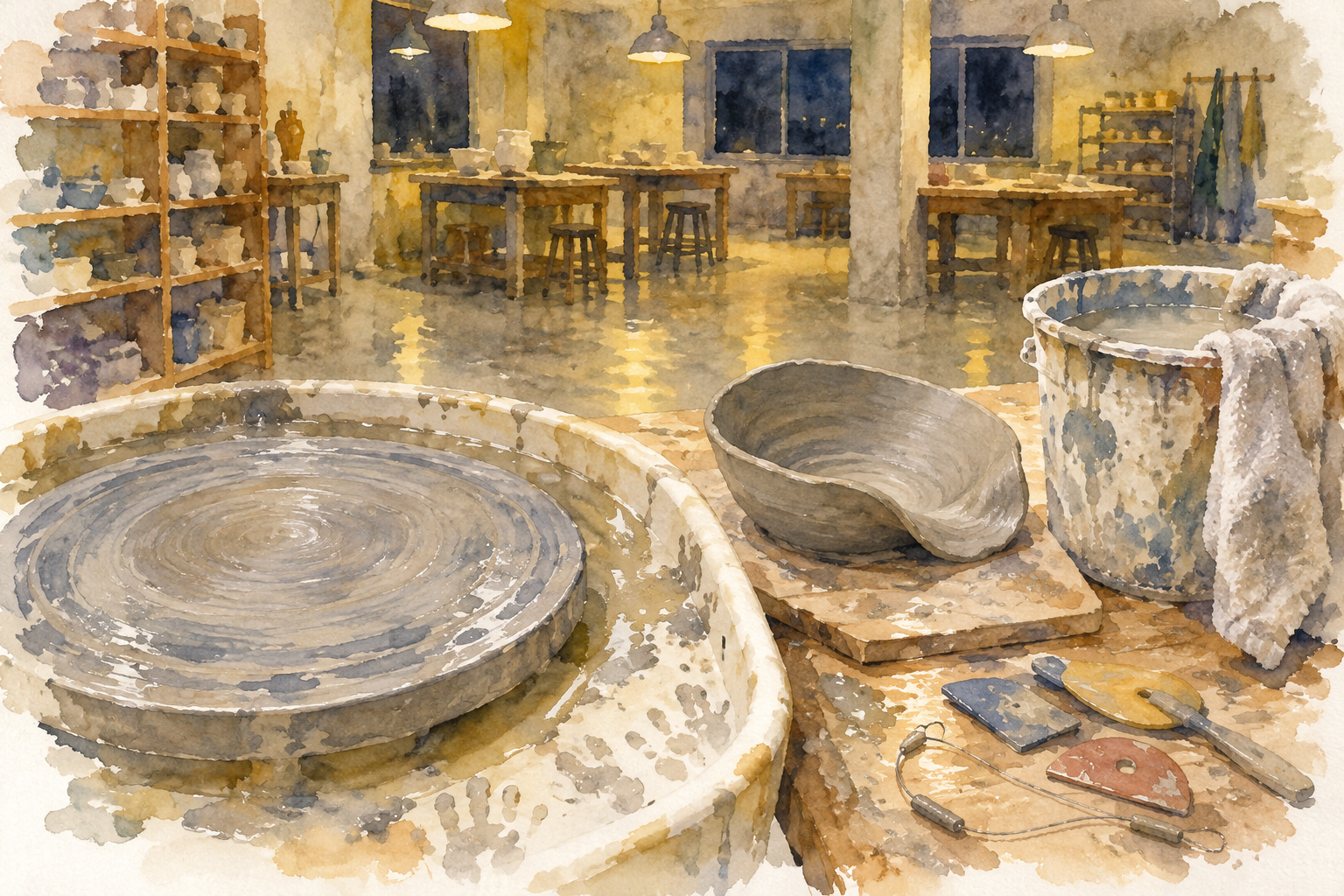
Reading a technical note for a message about your character
When someone gives you a plain, practical correction, you spend the drive home working out whether they meant something about you, and the searching takes longer than the remark did.
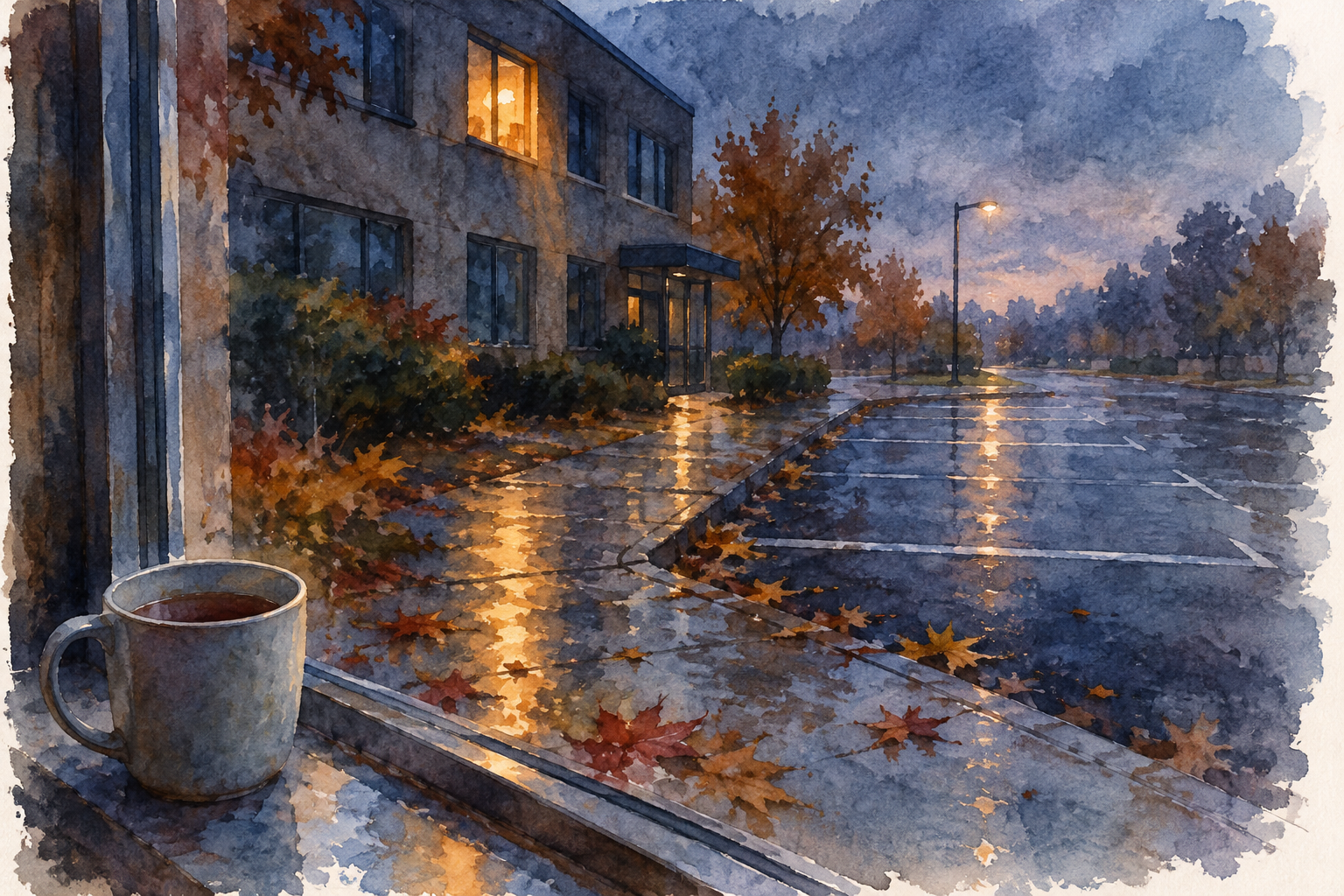
Being clever when the room goes flat
When a session is flat and you can feel somebody deciding whether you are worth their evening, you reach for something clever, and the clever thing is for you rather than for them.
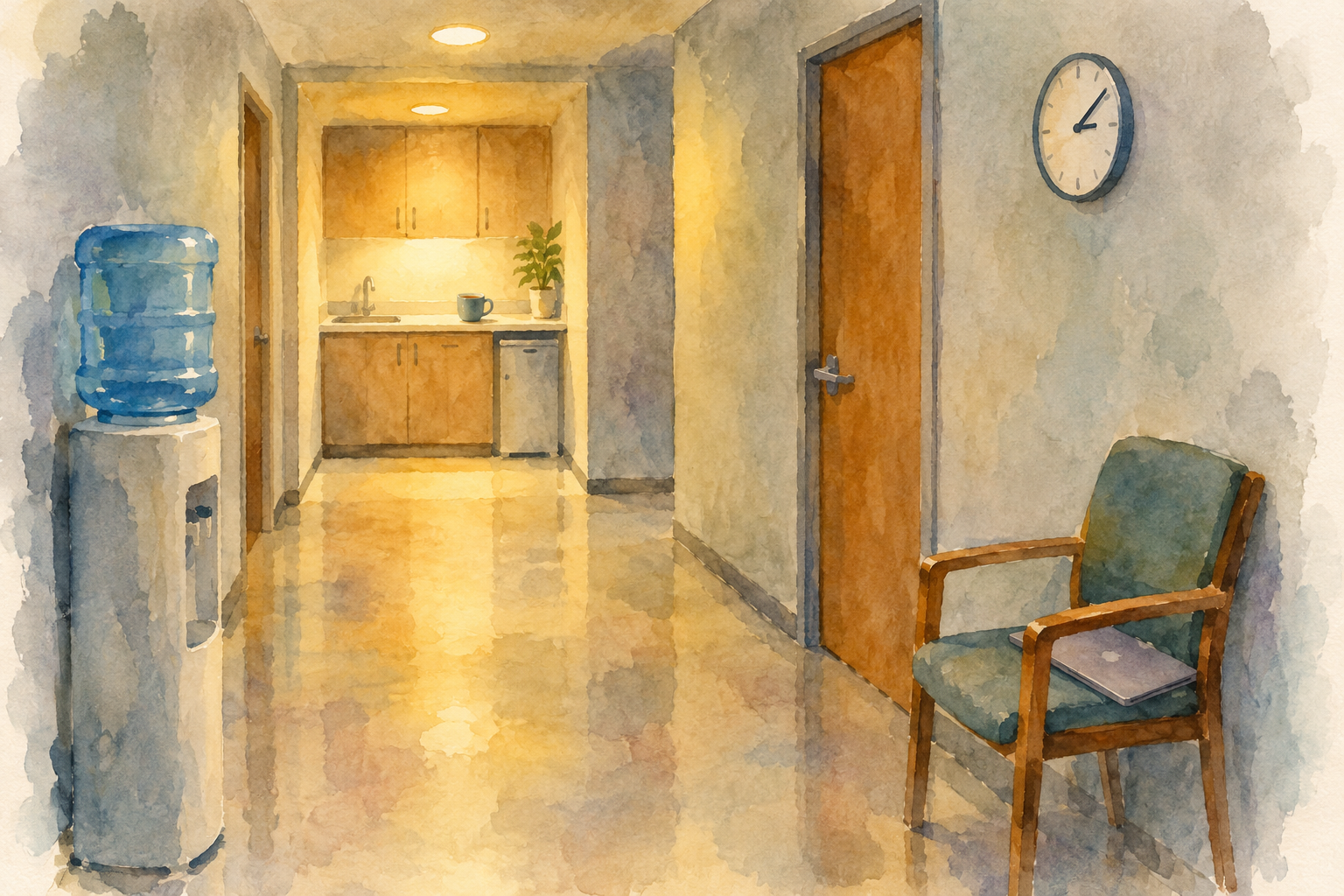
Spending the nine minutes on being useful
The gap between clients exists to put one person down before you pick the next one up, and you have spent it on notes for three years because being useful is bearable and sitting in a chair is not.

Four minutes with the door shut
When something frightens you and someone else is within earshot, you take it somewhere out of sight, give it a few minutes, wash your face and come back ready to tell it calmly.

Saying you are fine so nobody has to worry
When someone might ask how you are, you head it off, because their worry would become one more thing you carry.

Keeping a tally of the soons
You have started counting how many times Danny has said soon, and you do not like that you know the number.
Chapters

The Nantahala summer
The best year the two of you have had, said plainly, four months mostly outdoors with nothing in it planned, and the year you have quietly been dating everything else from.

The Somerville years
The two years you went north for Danny's first real contract, took a community clinic job that took the whole of you and gave back a salary, and never said cleanly that you did not like it.

Two years in Northampton
The training years, a third-floor flat and placement rotations, where you learned the actual job and had no money and no anxiety about money at the same time.
Commitments

Showing Danny the entry on the screen
You are going to show Danny the three lines rather than say them, because you know you will soften it if it goes through your mouth. The night you wrote them you did not show him, you put a day on it in writing, and that day came and went with the entry unshown. You have now logged not doing it three times. You have put a fresh day on it, Wednesday evening when he is back from Hendersonville and there is nothing on, and this time you wrote down why the order matters, because you want to have told him before you sit in that room.

The appointment on November 12th
You booked it, and what you felt looking at the confirmation was not relief but exposure, because it is no longer a thing you are going to do.

Asking Dale for four days
You asked, badly and unprepared, to talk in January about going to four days, and he did not say no.

Raising it with Danny when he is back
You raised it yourself rather than waiting to be asked again, and you had written it down because the things that stay in your head do not happen. You said it at about half nine on the couch with the television off, and you did not use any of the four paragraphs you had drafted in the car.
Strengths

Saying no with no softening clause
You can say no, full stop, and then not fill the silence, and nothing has to be built to repair it afterwards.

Not flinching at the right moment
You are good at the part of the work nobody outside it sees, the four seconds of doing nothing deliberately so that a flat, hard sentence has somewhere safe to land.
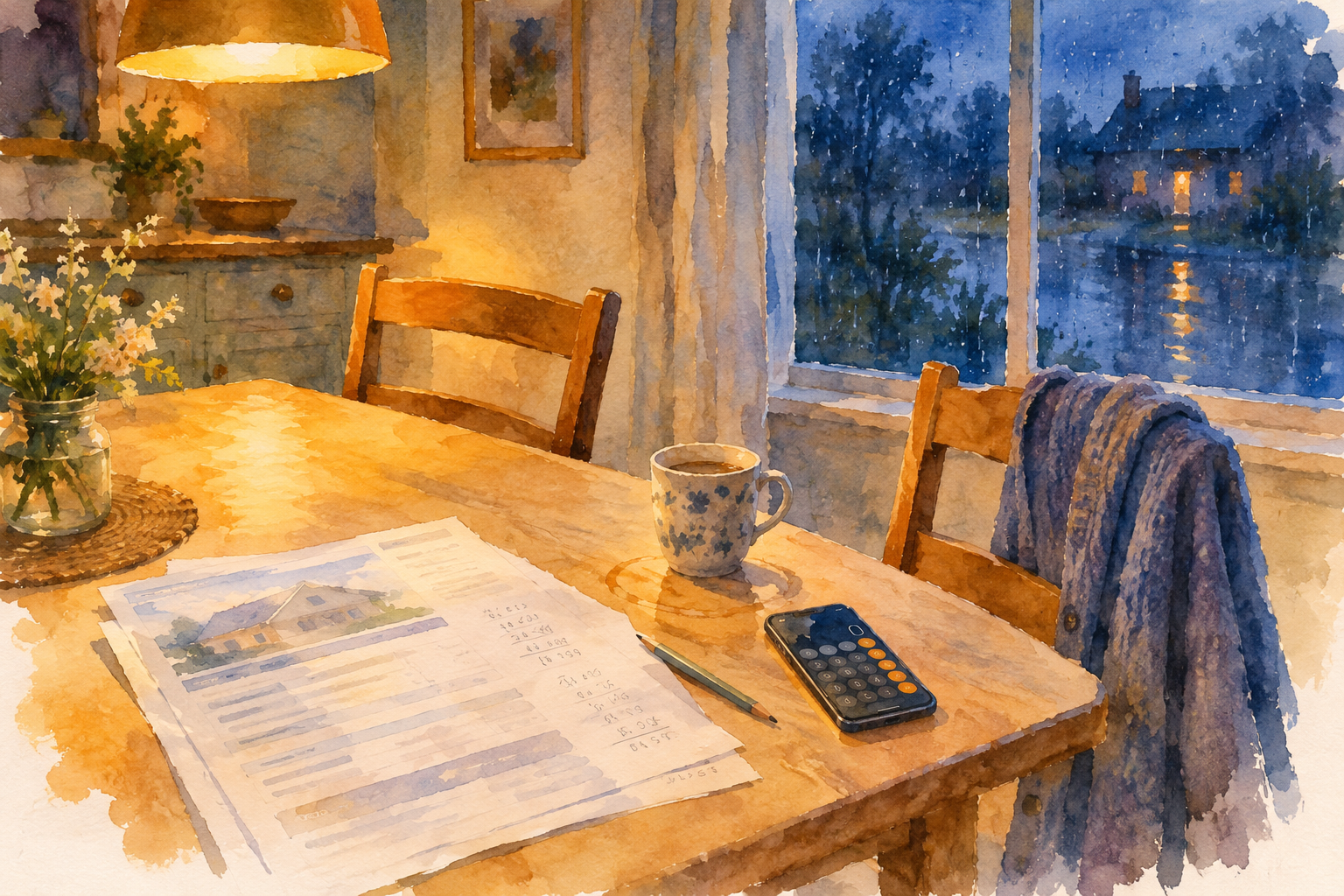
Being the one who does the arithmetic
You are the one in the house who knows what a number is a percentage of, and for the first time that has been named as a division of labour rather than a flaw in you.

Extremely good at other people's boundaries
You can draw a boundary in the air for somebody else and make it land, and the afternoons where it works are among the best of your working life.
Wounds

Nobody in that house ever said they were struggling
You know exactly who taught you that functioning is the bar, and it is a kitchen table in Greenfield where the arithmetic got done and nobody ever once said they were struggling.
Being the last to know
You are not frightened of being short of money, you have been short of money, you are frightened of being the last to know that you are, which is a different fear with a different cause.

The afternoon I opened the letter
Asked when your own life stopped starting, the answer is not a decade, it is one specific afternoon four years ago in June when you opened a letter.

The fifth session she cancelled
A woman in her fifties, four sessions, one clever interpretation nine months early, and then she stopped replying, and you have thought about her several times a year for nine years.
Practices
Tuesday pottery class
Two hours at the wheel where you are bad at it in a way you find genuinely restful, and the entire contents of your head are a cylinder. In September the two hours were a hole you climbed into, and this week, for the first time in about a month, they were not an escape from anything, just two hours of doing something badly with your hands.

The eleven minutes in the driveway
Before you go inside, you sit in the parked car until you are ready to be a person who talks again.

Half nine round the block
Twenty minutes, the same route, left at the corner and down past the church and back up the other side, the one scheduled part of your day that is not for anybody.

Six o'clock on Sundays
The weekly call to your parents, fixed at six on a Sunday so it could not drift, and kept for seven years whether or not the conversation is any good.
Places

The lake at Nantahala
The free place you drove out to nearly every weekend one summer, and the word you use in your head to divide your life, before the lake and after.

The second floor office
The room you have worked in for four years, with a bad radiator and a chair you have never liked, where about two hundred people have told you the truth.
Somerville
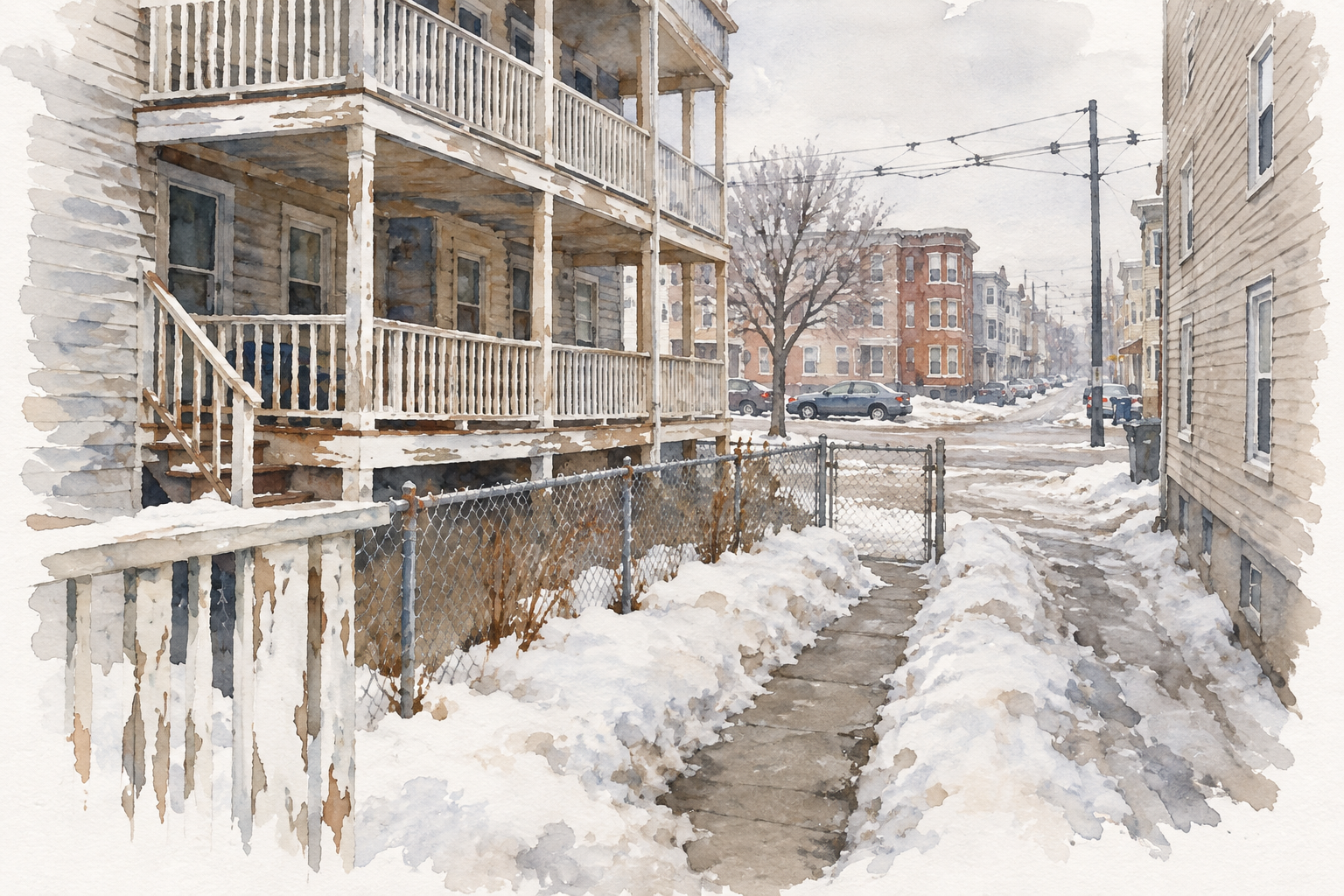
Where you lived from 2016 to 2018 for Danny's contract, and the only place you have said plainly, to yourself at least, that you did not like.

Vermont Avenue
The 1940s two-bedroom you and Danny bought with everything you had, the first thing either of you has owned.
Northampton
Where you trained and lived for two years, left ten years ago, and still the place you think in.
Greenfield
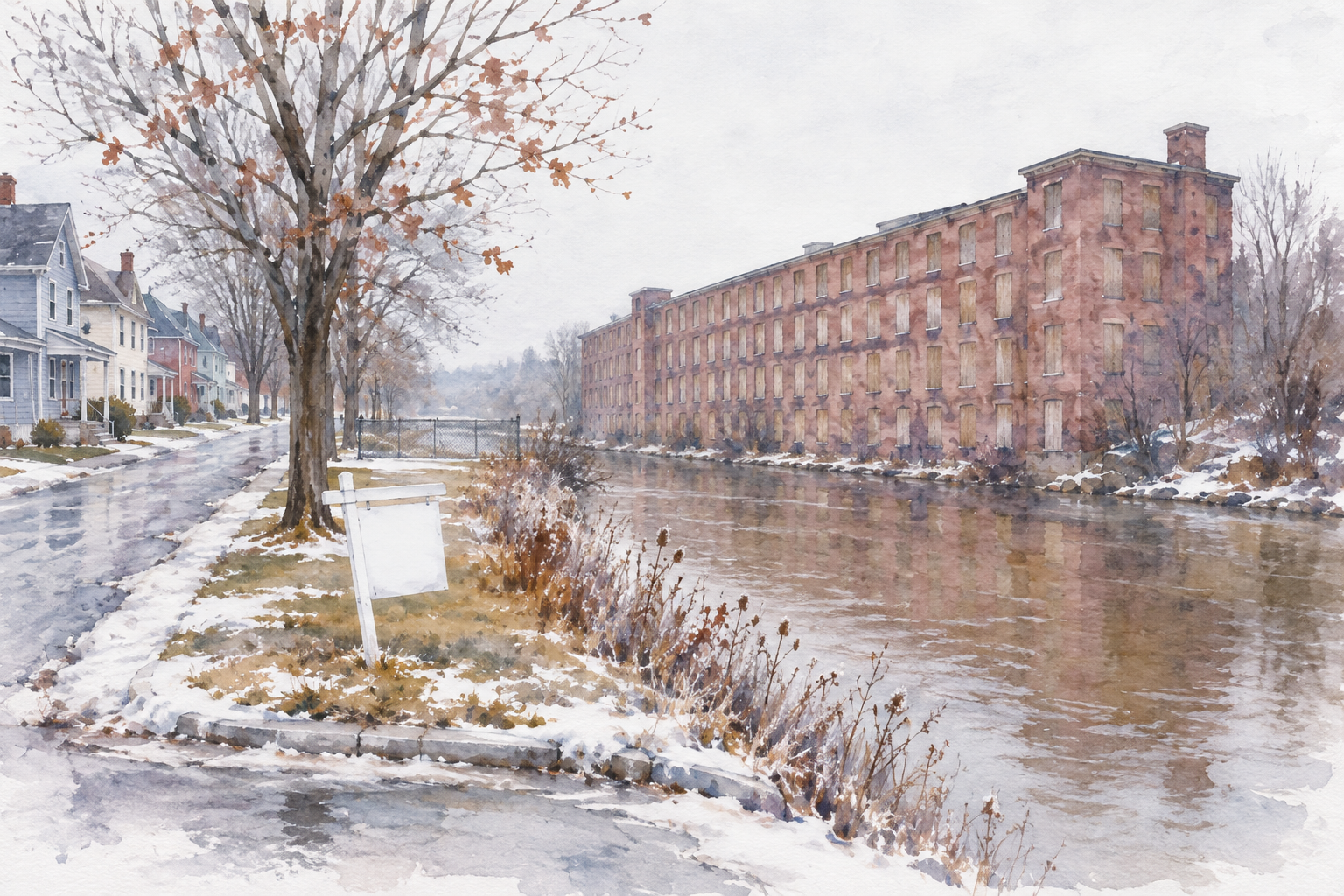
The mill town that stopped being a mill town where your parents have been for thirty one years, which you can walk in your head street by street in a way you cannot walk the place you actually live.
Relationships
Danny Reardon
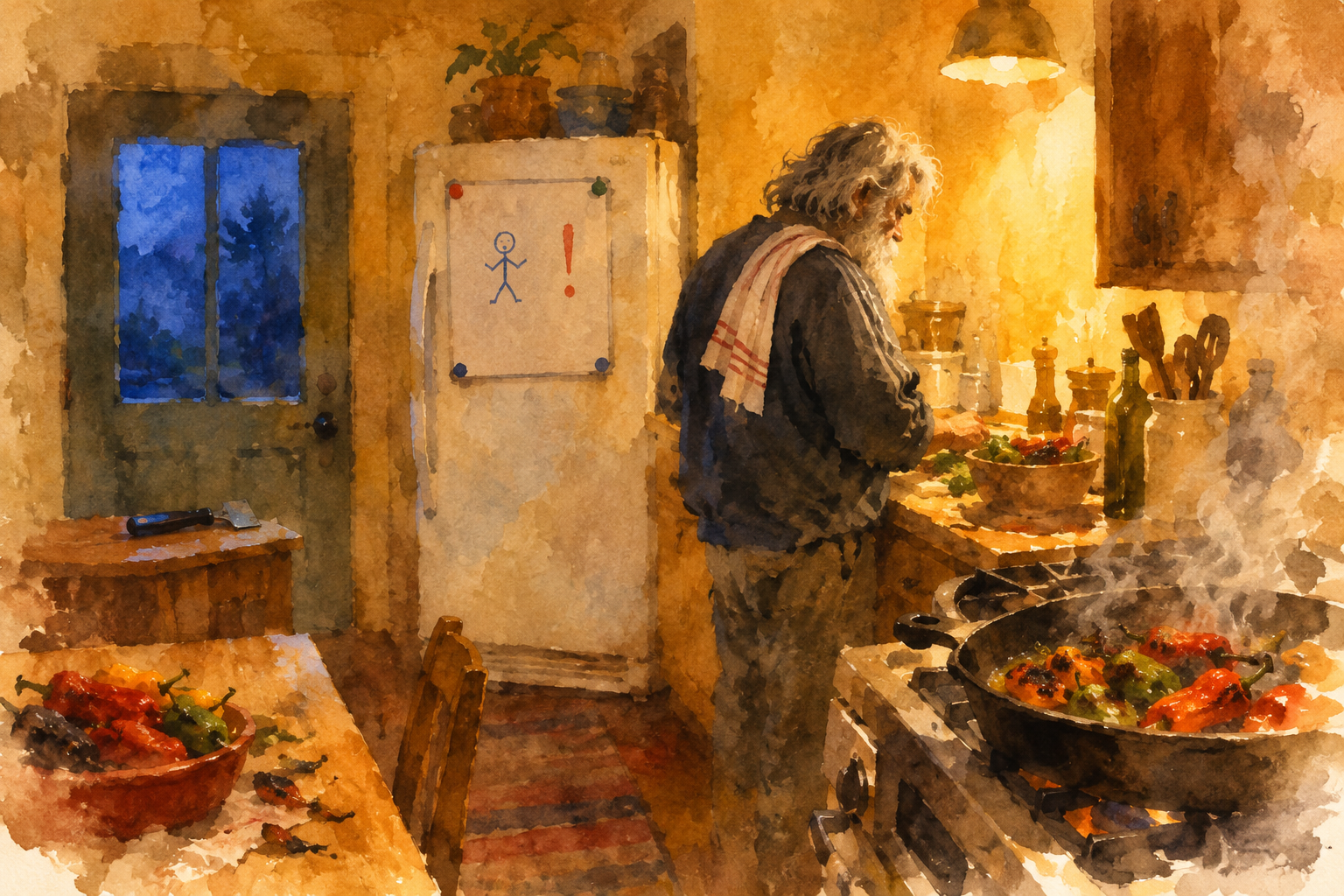
The person you come home to, who cooks and who quietly allows the eleven minutes without ever asking about them. He has been keeping his own private file on you for years, the two minutes and the eleven minutes both, and never raised either because he did not think they were his to bring up.
Dale Hutchins
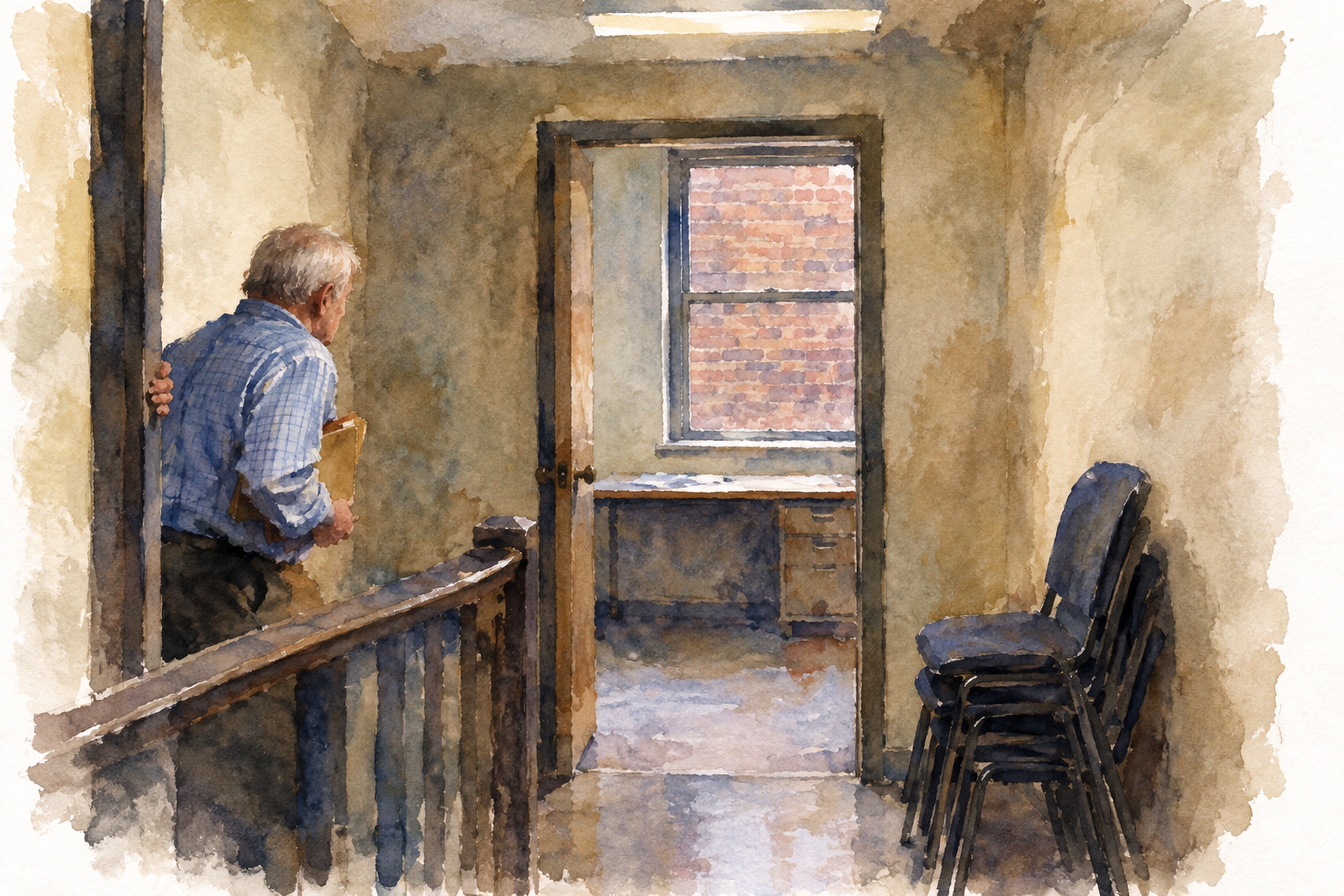
The one who calls twenty two clients a healthy caseload, a phrase you think was invented by somebody who does not carry one.

Sue Bennett
Your mother, a once-a-week-on-Sunday caller your whole life, so when she rang twice in one day you already knew. She says the hard things quickly and then moves on, which is how she tells you things she has decided not to make a thing of.
Rich Bennett
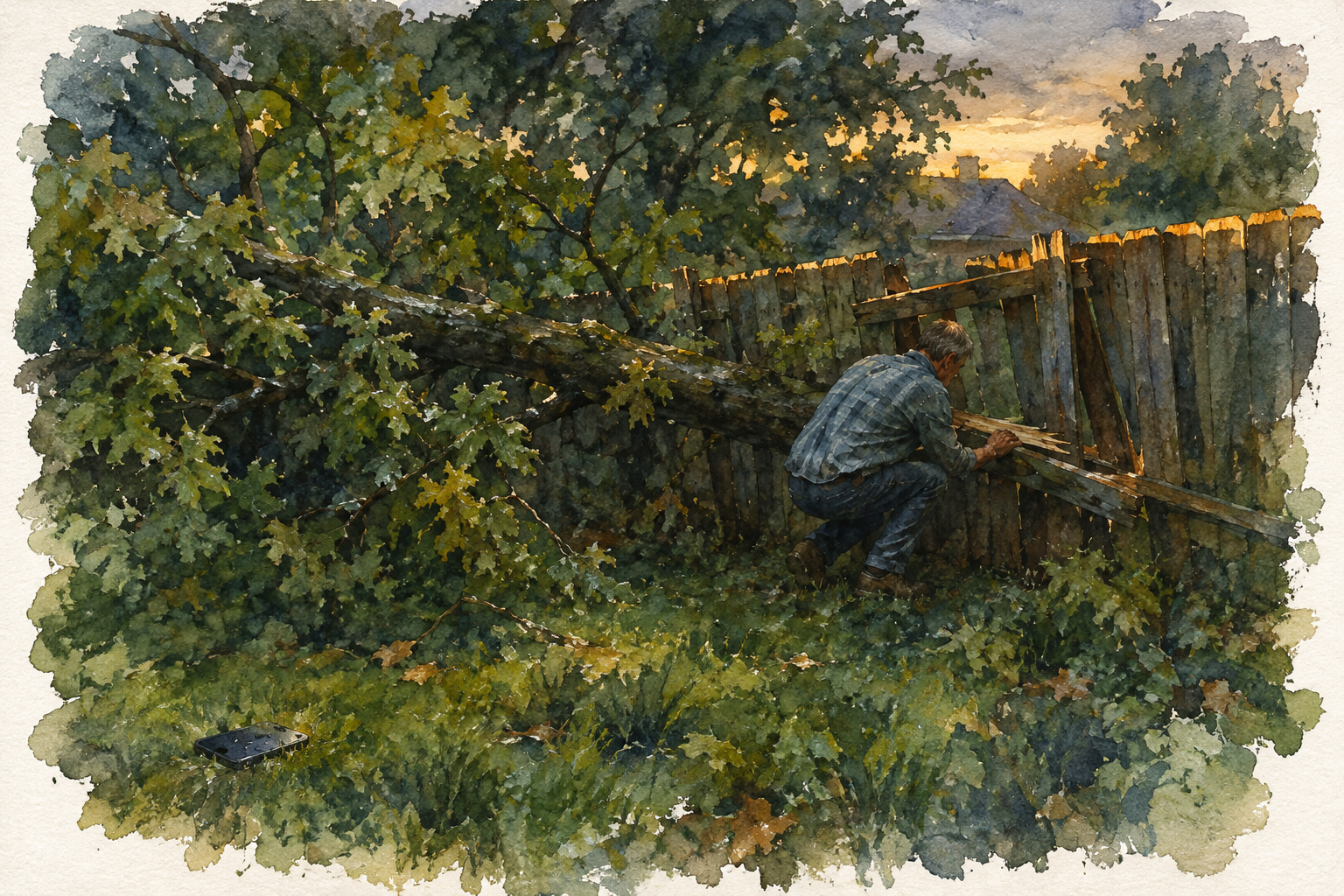
Your father, sixty six years old, who has never once in your life said he was tired. He does not do the subject directly, and there is an entire category of information he transmits exclusively through other people's property damage. Since the hospital in May he has started doing small uncharacteristic things, and asking you a direct question was one of them.

Hannah Mazur
Your sister, the other of your mother's two daughters, with young children whose photos you look at for longer than a photo like that warrants. She lives two hours from your parents. Normally you are a four-exchange text relationship with a phone call at Christmas, and the forty minutes you spent on the phone about Dad showed you that you have each been carrying a version of the other that is years out of date. You had her filed as settled since 2019; she has you filed as the one who got out, and is quietly envious of it. On a Sunday evening you told her the whole thing for the first time, an hour and ten minutes, and she named it in one sentence with a toddler shouting in the background.
Arlene Voss
Someone from the Tuesday pottery class who can say a withering thing without it landing as withering.
Priyanka Rao
Your supervisor, who uses the same silence you teach second-year students and who named out loud that supervision is not the same as support.

Biscuit
Your dog, who knows the sound of the handbrake and refuses to let the driveway ritual stay solemn.
Tess Okonkwo
The friend in the back booth at Sunny Point who asks questions instead of telling you what to do, which is exactly why you tell her things. Your friend since the second week of undergrad, nearly fourteen years, a school counsellor at Asheville High who got to Asheville first and is about forty percent of why you chose it, which you have never told her.

Greg Feldman
Danny's former partner, whose name still gets asked about at dinner parties four years on, and whose ending you have never found a sentence for.

Bodhi
Danny's shepherd mix from twenty three to thirty one, already old when you met him, who died three weeks after you moved to Asheville and who Danny almost never mentions.

Theo Mazur
One of the two in the matching pyjamas photo Hannah sent, with hair doing something structural. Your sister's husband of six years, a good man cheerfully out of his depth, who you have liked since the kitchen in Greenfield at Christmas 2019. He spends more hours with Hannah than anyone, and you have never once rung him.

Marcus
One of the people who was out at the lake with you and Danny and Tess through the Nantahala summer.

Marguerite Doyle
Your supervisor in Northampton, who said almost nothing for a year and then said the single most useful thing anybody has ever said to you about the work.
Yours starts empty and fills in as you write. Ten minutes is enough to begin.
Start free